

Most families travelling between Lisbon and Porto do one of two things: take the train straight through Coimbra or follow the motorway north without stopping.
That is understandable. The distance looks manageable, and everyone is usually eager to reach the next hotel.
But here’s the real truth: Coimbra is one of the best-value stops on a family trip to Portugal. It has a historic university, Roman ruins, riverside walks, forests, castles, and enough nearby variety to fill two relaxed days without the crowds or prices of Lisbon and Porto.
If you are researching central Portugal travel, planning a northern Portugal itinerary, or trying to break up the Lisbon-to-Porto journey, Coimbra and the surrounding region deserve much more than a quick coffee stop.
Why families drive straight past Coimbra, and why that’s a mistake
Coimbra sits almost exactly where many Portugal travel itineraries need a pause. Lisbon is to the south. Porto is to the north. The motorway and railway make the journey feel like a simple transfer.
That is the problem.
The map makes Central Portugal look functional rather than interesting. In reality, the landscape changes constantly. You move from a university city to Roman ruins, from wooded mountain paths to Atlantic beaches, from medieval walls to calm lagoons.
There is far less pressure to queue, rush, or keep everyone moving at the same pace. Accommodation is often more affordable than in Lisbon or Porto, restaurants are usually easier on the budget, and the region feels more lived-in than polished for tourism.
It is also a good fit for families because the experiences are varied. One child can run through an old forest while another is fascinated by Roman mosaics. Parents get history, scenery, and decent food without planning three major attractions for every day.
Central Portugal is genuinely Portugal off the beaten path, but it is not difficult to reach.
Coimbra is more than a university stop
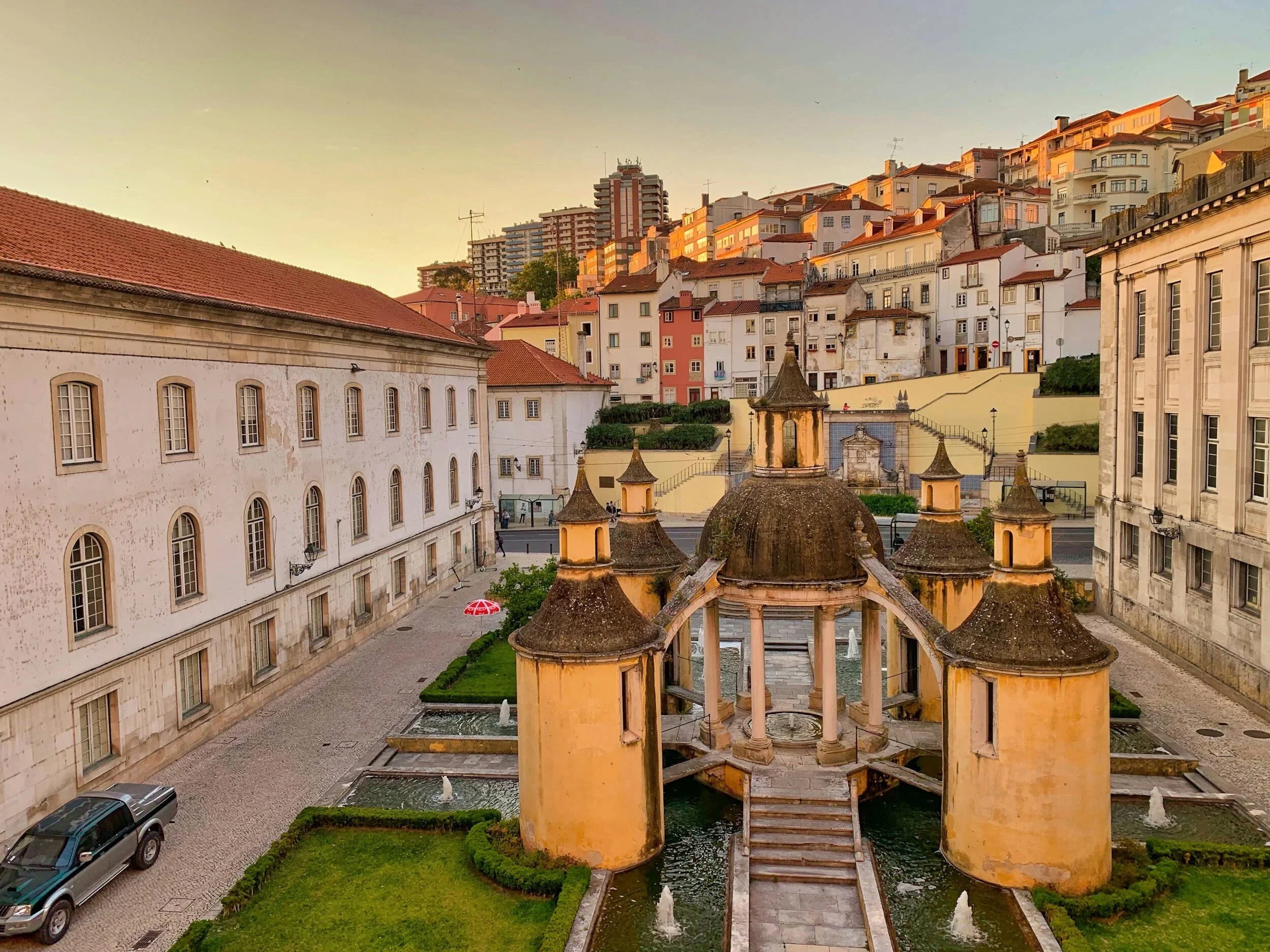
Coimbra is often described as Portugal’s historic university town, which is accurate but incomplete. The city has a dramatic hilltop setting, a broad Mondego riverside, old lanes, gardens, and a slower rhythm that makes it manageable with children.
It is smaller and less crowded than Lisbon. It is generally less expensive than Porto. And there is enough to do for two good days, particularly if you mix indoor sights with time outside.
Start with the University of Coimbra
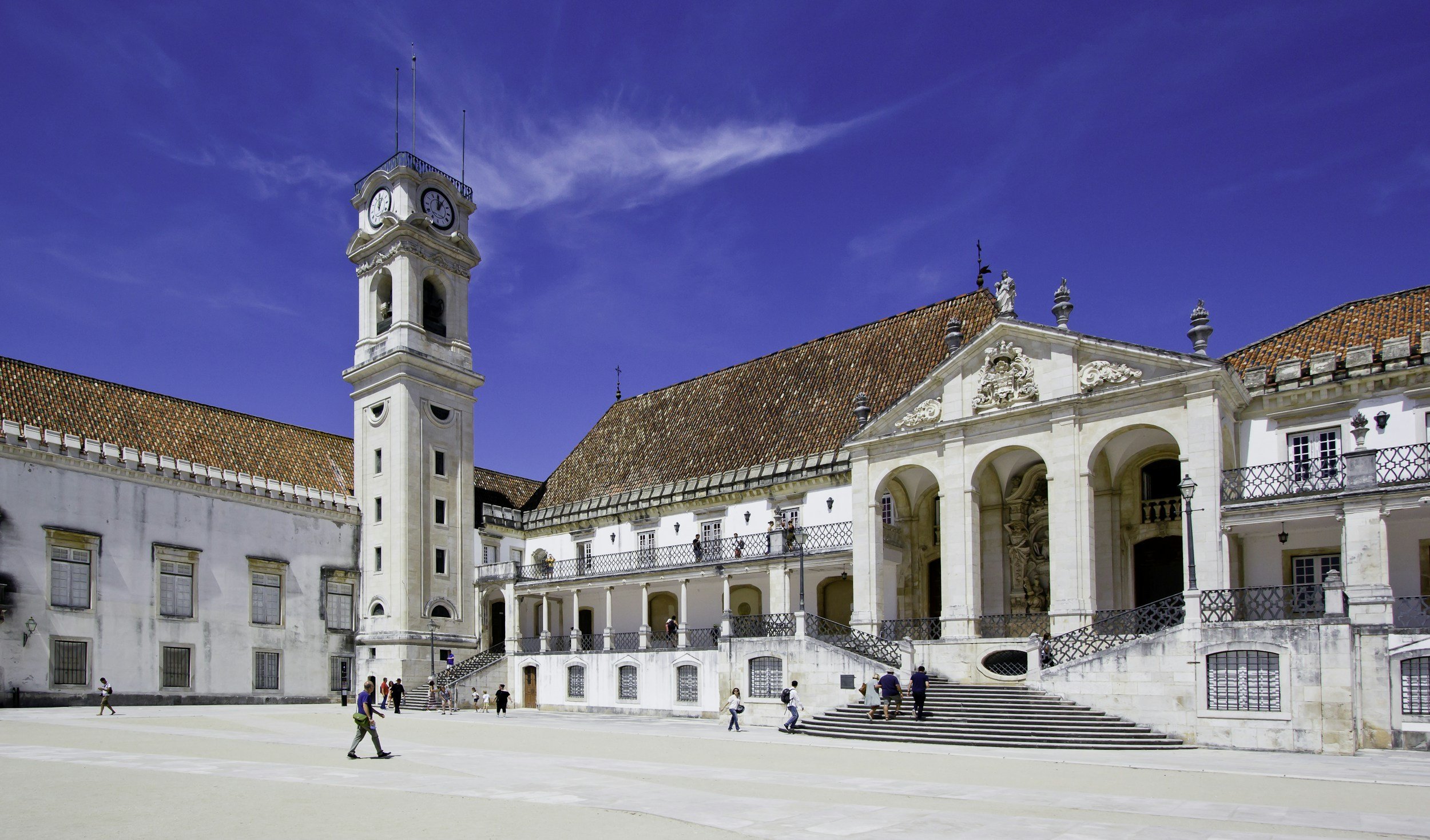
The University of Coimbra was founded in 1290 and is one of the oldest universities in Europe. Its historic buildings are part of a UNESCO World Heritage Site, but the real family appeal is visual: courtyards, towers, painted ceilings, tiled walls, old staircases, and views across the city.
The highlight is the Joanina Library, a magnificent Baroque library filled with gilded details and tall wooden shelves. It feels more like a film set than a working historic building.
The practical bit is important:
The Joanina Library is not sold as a standalone ticket.
You choose a university program that includes the library and other spaces.
Entry to the library is tied to a specific timed slot, usually around 20 minutes.
Other areas, such as the Royal Palace, Saint Michael’s Chapel, and university museums, can be visited around that fixed time.
Buy ahead during school holidays, weekends, and summer.
Arrive early. The upper university area involves steps and slopes, and you do not want to reach the library entrance with everyone already tired.
The current ticket arrangements and programs are listed through the official Visit UC ticket platform. Check the time slot carefully before booking because the library entry is the part you cannot casually shift. In our opinion, the best way to experience the University of Coimbra is on a guided historical tour led by former students. They bring the university and surrounding town to life with fascinating stories, local insights, and a bit of history that even kids can connect with.
Would younger children enjoy it? Usually, yes, for about the right amount of time. The library is not a place to linger for an hour with a restless toddler, but a short timed visit works well when paired with open courtyards and the university’s other rooms. There’s even a jail for naughty children inside…just saying!

Make the hill easier
Coimbra is beautiful, but it is not flat. The old upper town has steep sections, uneven paving, and stairs that are hard work with a stroller.
Use the Elevador do Mercado to avoid some of the climb, then walk through the historic centre in stages. A sturdy stroller is more useful than a lightweight travel buggy here, although a carrier may still be easier in the oldest streets.
After the university, walk down towards the Sé Velha, Portugal’s fortress-like Old Cathedral, and then continue into the Baixa. The lower city is easier for wandering, cafés, snacks, and a slower riverside walk.
This is your recovery time.
Let the children watch the boats on the Mondego, find a bakery, and stretch their legs. Coimbra works best when you resist the temptation to treat every hour as sightseeing time.
Santa Clara-a-Velha brings the history down to earth
Across the river, the Monastery of Santa Clara-a-Velha tells a different kind of story. This Gothic convent was gradually reclaimed by flooding from the Mondego, and the ruins now sit beside a modern visitor centre that explains what happened.
For children, this is more understandable than a long historical lecture. They can see the water damage, the abandoned buildings, and the relationship between the monastery and the river.
Allow 45 minutes to an hour. It is a good pairing with Portugal dos Pequenitos, the miniature park nearby, especially for younger children. The miniature houses and monuments provide a change of pace after the university and cathedral.
For a first visit, our preferred Coimbra itinerary is simple:
Morning: University of Coimbra and Joanina Library
Lunch: Baixa or near the river
Afternoon: Old Cathedral, lower town, and riverside
Second morning: Santa Clara-a-Velha and Portugal dos Pequenitos
Second afternoon: garden, park, or an easy café-based wander
Do not make Coimbra a checklist city. Two relaxed days are better than one exhausting day.
Conímbriga is the Roman site children can actually explore
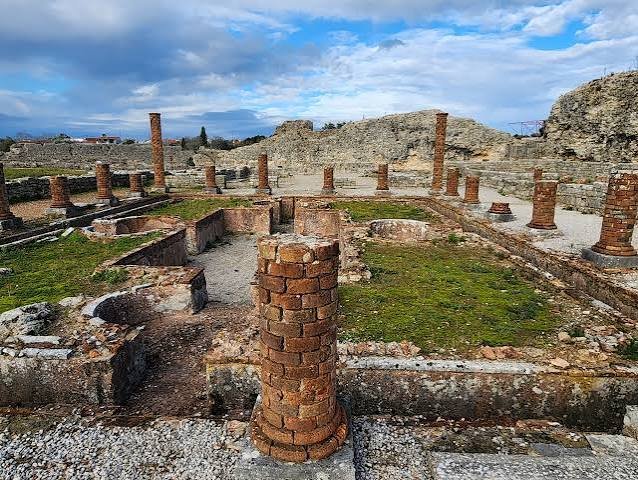
The Conímbriga Roman ruins are around 20 minutes from Coimbra by car and are one of the best-preserved Roman archaeological sites on the Iberian Peninsula.
This is not just a museum where children are expected to look politely at objects in glass cases. The site opens out across ruined streets, houses, walls, courtyards, and remarkably detailed mosaics.
That physical scale makes a difference. Children can walk through the remains of Roman homes and imagine where people cooked, slept, bathed, and gathered. The mosaics are the part that stops most visitors: geometric patterns, animals, and intricate designs still visible beneath your feet.
Allow two to three hours, depending on the weather and your children’s patience. Go earlier in the day during the hottest months because there is limited shade across parts of the archaeological site.
The museum and ruins are covered by the same admission. Current published information lists the site as open daily from 10:00 to 18:00, with final ticket sales in the late afternoon, but check the National Museum of Conímbriga visitor information before travelling.
Bring water, hats, and shoes that can cope with uneven ground.
This is a half-day outing, not a quick roadside stop. Combine it with a relaxed afternoon back in Coimbra rather than adding three more attractions.

Bussaco Forest is the low-effort, high-reward nature stop
North of Coimbra, Bussaco Forest, also written Buçaco, feels completely different from the city.
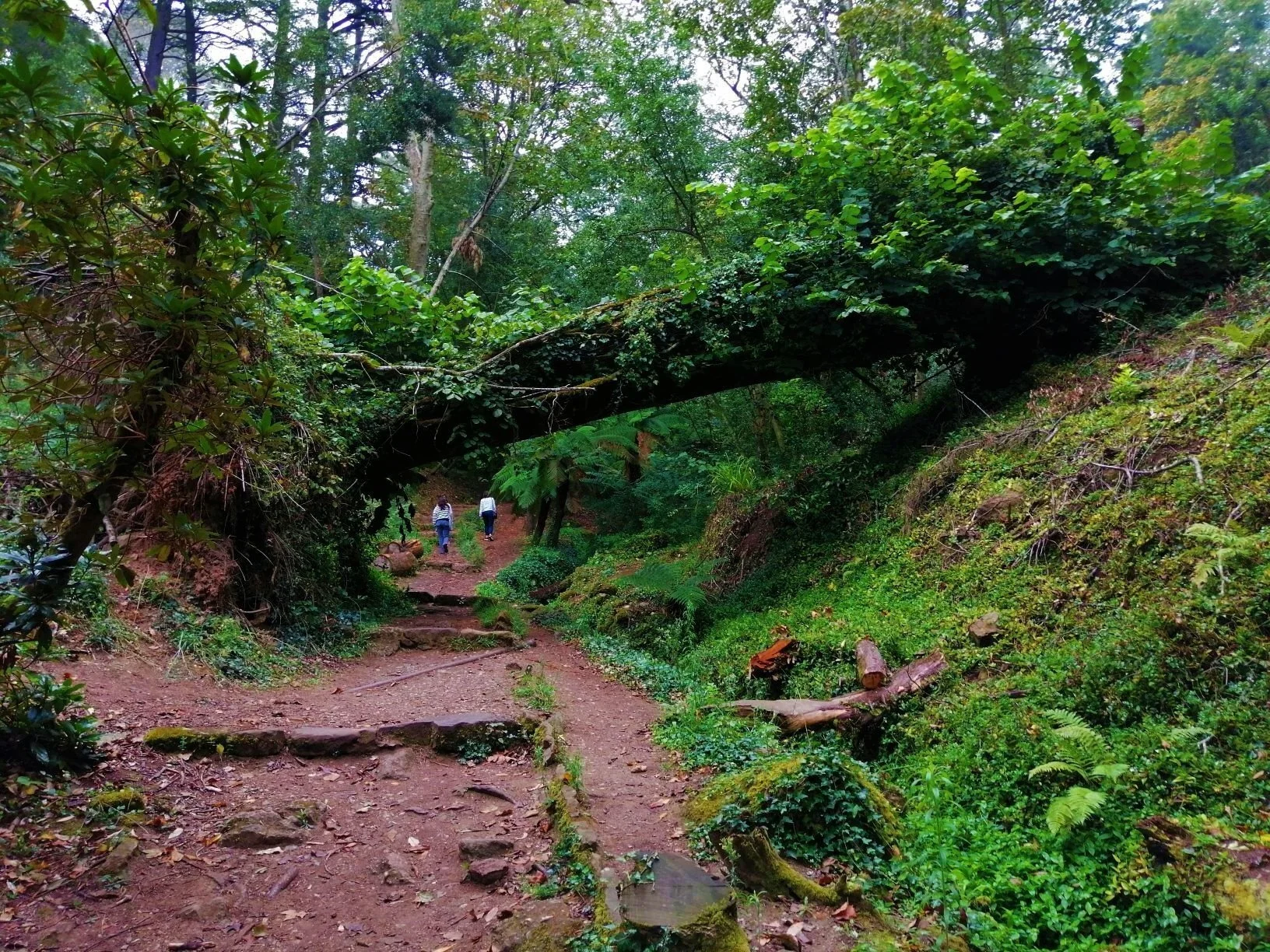
The forest is filled with enormous trees, ferns, mossy paths, old chapels, viewpoints, and the wonderfully theatrical Palace Hotel do Bussaco. It is the sort of place where children start looking for hidden paths without being asked.
The palace is not a fairytale castle, but its neo-Manueline exterior has enough turrets, stonework, and decorative detail to keep younger visitors interested. You can admire it from outside and walk through the surrounding grounds even if you are not staying at the hotel.
For most families, allow three to four hours. Choose a short loop rather than trying to conquer the whole forest.
Good options include:
A short forest loop: best for younger children and mixed walking abilities
Vale dos Fetos and Fonte Fria: leafy, atmospheric, and visually interesting
The Convent Trail: a longer route combining history and trees
Cruz Alta: choose this only if everyone is comfortable with a steeper walk
Some routes include steps, uneven paths, and damp surfaces. Bring proper shoes, particularly after rain. A pushchair may work on some lower paths but will not be practical everywhere.
The forest is especially good in spring and autumn, when the colours and cooler temperatures make walking easier. In summer, it is one of the better places to escape the heat for a few hours.
See the Center of Portugal guide to Bussaco Forest for the wider area and walking information.
The wider region turns Coimbra into a proper family base
Coimbra itself can fill two days, but the surrounding region is where Central Portugal becomes especially useful for families.
Aveiro: canals, boats, and an easy change of scenery
An Aveiro day trip works well if your children need something lighter after several historic sites.
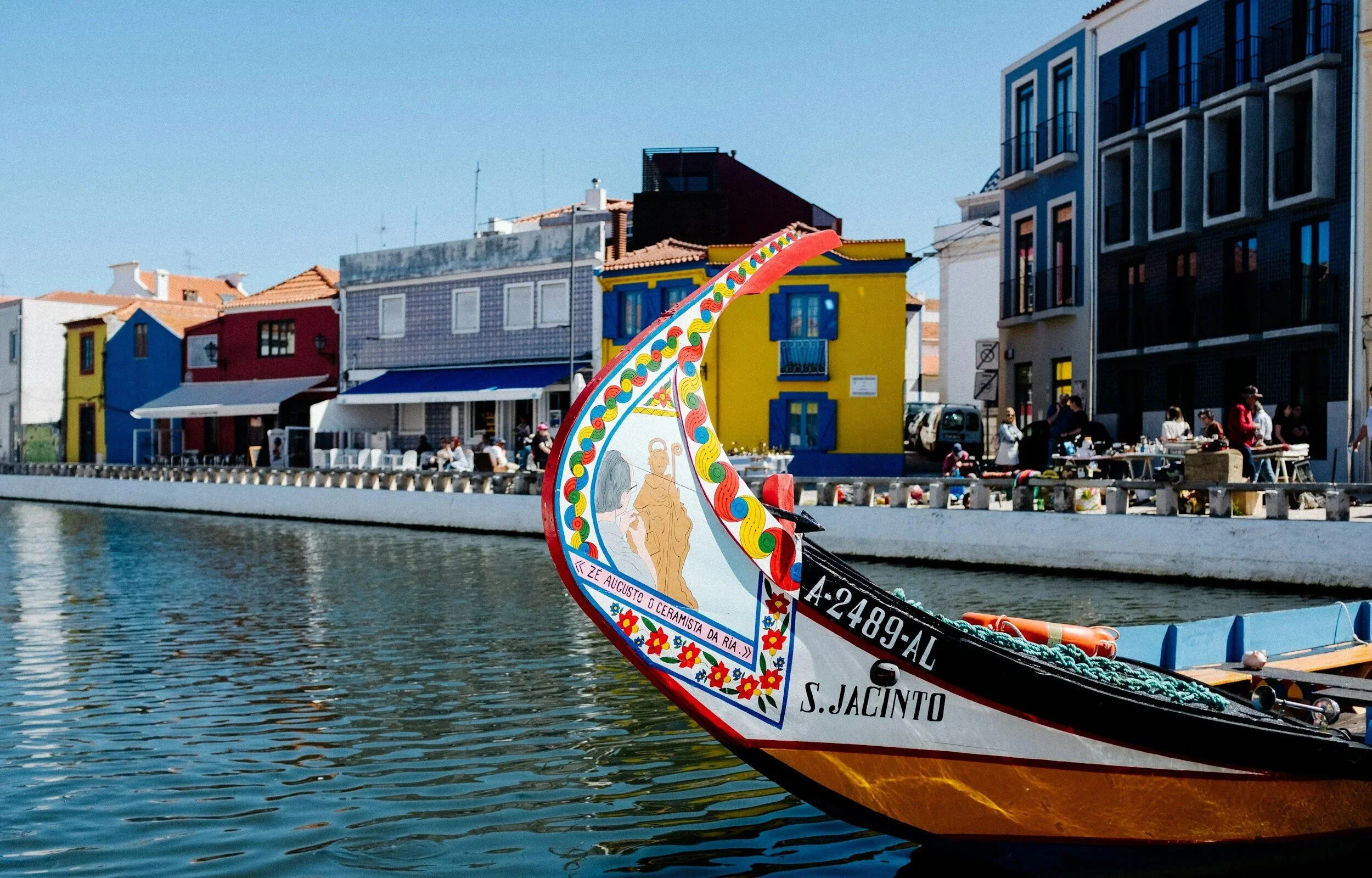
Aveiro is known for its canals, colourful moliceiro boats, Art Nouveau façades, and sweet ovos moles pastries. A boat ride gives younger children a clear activity to look forward to, rather than asking them to appreciate architecture for another afternoon.
Continue to Costa Nova if you have a car. Its striped beach houses make a fun photo stop, and the coast provides room to run.
From Coimbra, Aveiro is easiest by car if you also want Bussaco Forest or Costa Nova. By train, it is a straightforward city visit, but you will need to factor in local transport and walking.
Allow half a day for Aveiro itself or a full day if you include Costa Nova and the beach.

Nazaré brings the Atlantic drama
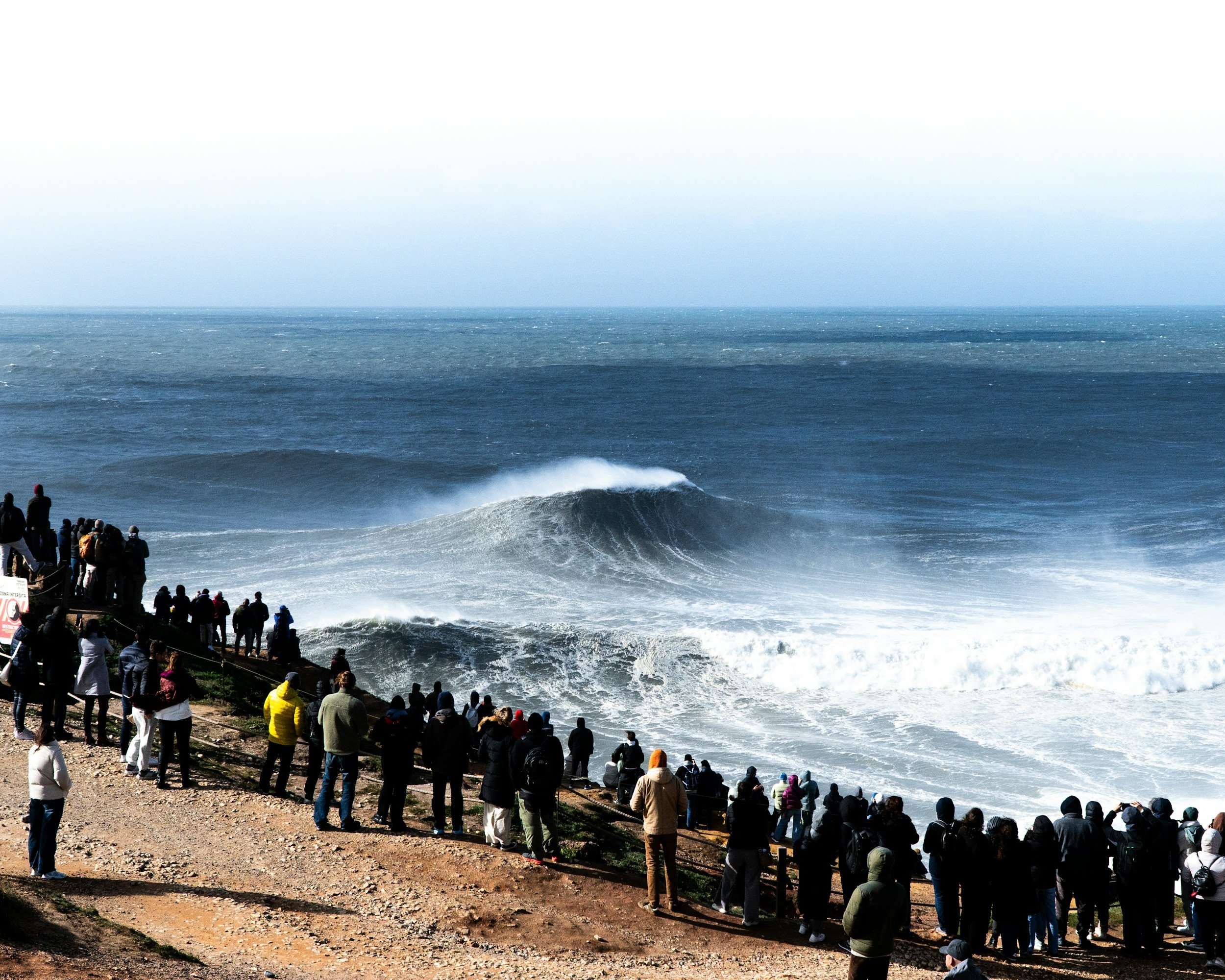
Nazaré, Portugal is famous for its enormous winter waves, but families do not need to visit during a storm to enjoy it.
The lower town has a broad beach, seafood restaurants, and a promenade. Take the funicular up to Sítio for wide ocean views and a completely different perspective over the bay.
The waves are powerful, even when they do not look dramatic from the shore. Keep children close to the waterline and follow local beach advice. This is not the place to assume that a calm-looking Atlantic is safe for swimming.
Nazaré works best as a stop of two to four hours, or as part of a longer route with Óbidos.
Óbidos and Lagoa de Óbidos give you two very different stops
Óbidos, Portugal is the postcard medieval town: whitewashed buildings, narrow lanes, a castle, and a wall circling the historic centre.
It is worth seeing, but the walls are not suitable for careless wandering with young children. Some sections are narrow and unprotected. Hold hands, take your time, and stay on the safer lower streets if anyone is nervous with heights.
The better family combination is Óbidos plus Lagoa de Óbidos. After the cobbles and crowds of the walled town, the lagoon provides open space and shallow, calm water. It is a much easier place for toddlers to play and for everyone to decompress.
Allow two to three hours in Óbidos, then another two hours or more at the lagoon if the weather is warm.
You can also connect this visit with the existing Sintra and Óbidos planning content and our guide to the best day trips from Lisbon for families.
Serra da Estrela is the mountain option
East of Coimbra, Serra da Estrela offers a much bigger landscape: high plateaus, granite villages, open valleys, walking trails, and Portugal’s highest mainland mountain range.
At Torre, 1,993 metres, the scenery feels entirely different from the coast. In winter, snow can transform the area into a popular family destination for sledging and first-time snow experiences.
This is not a sensible quick day trip if you are travelling with very young children or trying to keep driving time low. Depending on your route, the mountain roads and distances can make it a long day.
Choose Serra da Estrela if:
You have at least one full day available.
Your family enjoys open landscapes and outdoor time.
You are travelling in winter and want to see snow.
You are happy to stay one or two nights around Covilhã, Manteigas, or another mountain base.
For a short Portugal itinerary, choose Coimbra, Conímbriga, and Bussaco instead. Serra da Estrela deserves more breathing room.
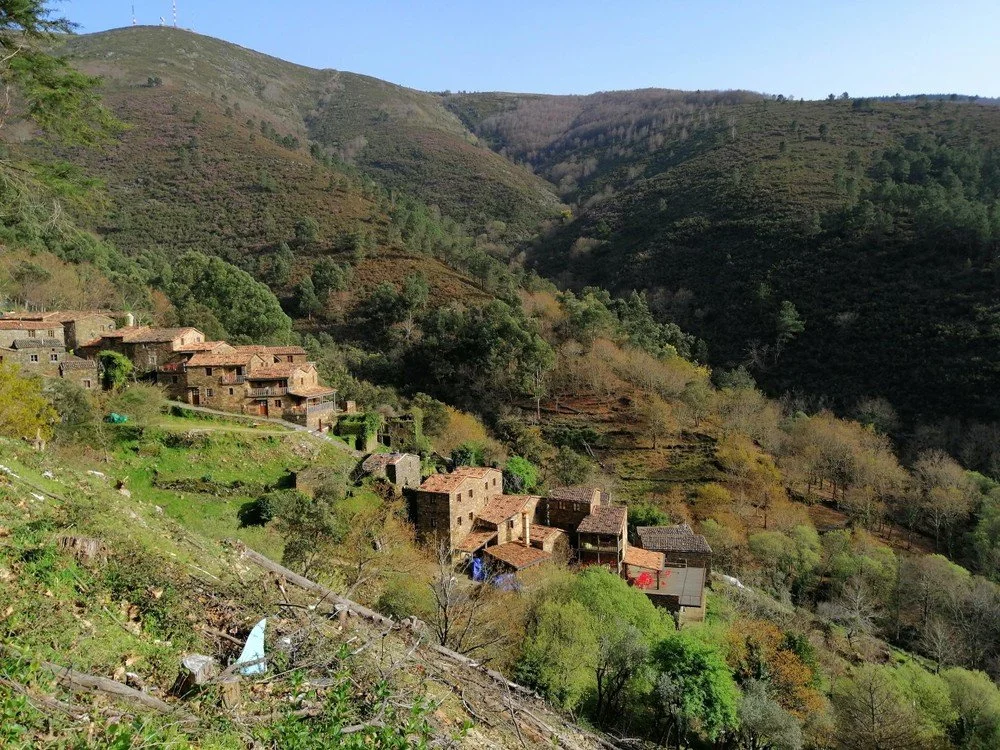
If you’re not up for heading all the way into the mountains but still want some outdoor adventure, explore Portugal’s charming Schist Villages instead. For a fun family outing, join a guided tour of the Schist Villages and medieval castles, where you can discover storybook villages, ancient castles, and beautiful countryside along the way. Note: Some of the Schist Villages can be tricky to reach, with narrow, winding mountain roads. We recommend taking a guided tour in many areas so you can relax and enjoy the scenery without the stress of navigating unfamiliar roads.


Should you drive or take the train?
Take the train if you are mainly visiting Coimbra. Rent a car if you want to explore Central Portugal properly.
Long-distance trains connect Lisbon, Coimbra, and Porto efficiently. Typical journey times are approximately:
Lisbon to Coimbra: 1 hour 45 minutes to 2 hours
Coimbra to Porto: around 1 hour to 1 hour 15 minutes
Lisbon to Porto: roughly 2 hours 45 minutes to 3 hours 15 minutes
Long-distance services use Coimbra-B, followed by a short local connection into the city centre. That is perfectly manageable, but remember the extra movement when you are carrying luggage, car seats, or tired children.
Check the current timetable through CP’s official train information.
A car gives you much more flexibility for:
Conímbriga
Bussaco Forest
Aveiro and Costa Nova
Nazaré and Óbidos
Castles and hilltop villages
Serra da Estrela
The trade-off is parking, tolls, and the occasional narrow village road. For most families, the best option is a mixed route: train between Lisbon, Coimbra, and Porto, or rent a car for the central-region section.
How many nights should you stay?
One night
Do this only if Coimbra is a practical overnight stop between Lisbon and Porto.
Visit the university, eat dinner, and continue the next day. It is better than driving straight through, but it will feel compressed.
Two nights
This is the minimum we recommend for most families.
You can see Coimbra properly, visit the university and Santa Clara-a-Velha, and add either Conímbriga or Bussaco.
Three nights
This is the better choice if Central Portugal is a genuine part of your trip.
You can combine Coimbra, Conímbriga, Bussaco, and one wider outing without turning every day into a transfer day.
Four or more nights
Base yourself in Coimbra for a slower regional stay, or split the route with one night around Óbidos, Nazaré, Aveiro, or Bussaco.
Do not move hotels every night simply because the map suggests you can.
A practical two- to three-day Central Portugal itinerary
Day 1: Coimbra’s historic center
Arrive and settle in
Visit the University of Coimbra and Joanina Library
Walk down through the Old Cathedral and Baixa
Take a gentle riverside walk
Have an early dinner close to your accommodation
Day 2: Roman history and river life
Morning visit to Conímbriga Roman ruins
Lunch back in Coimbra or in Condeixa-a-Nova
Santa Clara-a-Velha in the afternoon
Add Portugal dos Pequenitos for younger children
Keep the evening unplanned
Day 3: Choose your family’s preferred scenery
Choose one:
Bussaco Forest for trees, trails, and the palace
Aveiro and Costa Nova for canals, boats, and the coast
Óbidos and Lagoa de Óbidos for medieval streets followed by calm water
Nazaré for ocean views and the funicular
Serra da Estrela only if you are prepared for a long mountain day
The family-friendly Lisbon–Coimbra–Porto road trip spine
For a classic Portugal travel itinerary, this route works exceptionally well:

Lisbon → Óbidos or Nazaré → Coimbra → Bussaco or Aveiro → Porto
For a quicker version:
Lisbon: 3 to 4 nights
Coimbra: 2 nights
Porto: 3 to 4 nights
For a slower road trip:
Lisbon: 3 nights
Óbidos or Nazaré: 1 to 2 nights
Coimbra: 2 to 3 nights
Bussaco or Aveiro: 1 night
Porto: 3 nights
This gives you the main cities without ignoring the region between them. For ideas at either end, read our Lisbon with Kids: The Complete Family Guide (2026) and Porto with Kids: The Complete Family Guide (2026).
The best time to visit Central Portugal with kids
Spring and early autumn are the easiest seasons. April to June and September to October usually bring comfortable sightseeing temperatures, fewer crowds, and better conditions for walking in Coimbra and Bussaco.
Summer is still enjoyable, but plan outdoor visits early. Conímbriga, Óbidos walls, and exposed historic sites become tiring in the afternoon heat.
Winter suits Coimbra’s museums, university buildings, and restaurants. Bussaco can be damp, and Serra da Estrela may have snow or difficult road conditions, so check locally before setting out.
The coast around Nazaré can be windy outside summer, while the big-wave season usually runs through the colder months. Watch from a safe viewpoint rather than treating the ocean as a swimming beach.
Coimbra and Central Portugal with Kids: Frequently Asked Questions
Is Coimbra worth visiting with kids?
Yes — Coimbra is absolutely worth visiting with kids. It gives you a historic city, a manageable size, and enough family-friendly variety to fill two good days without the heavier crowds of lisbon with kids sightseeing or the higher prices many families notice in porto with kids planning.
That is the thing most guides skip past. Coimbra is not just a university stop. You have the UNESCO-listed University of Coimbra, the Joanina Library, riverside walks, the Monastery of Santa Clara-a-Velha, and easy access to coimbra portugal day trips like Bussaco Forest and Conímbriga.
What is Coimbra famous for, and what should families see there?
Coimbra is famous for its historic university, its UNESCO-listed upper town, and the Joanina Library. For families, the core sights are the University of Coimbra, the Joanina Library, the Sé Velha, the riverside, and Santa Clara-a-Velha across the river.
If you have extra time, add Portugal dos Pequenitos for younger children and Conímbriga for one of the most worthwhile nearby outings. Stated plainly, the university is the headline, but the mix of big history and easier outdoor time is what makes the city work so well for families.
How many days do you need in Coimbra?
Two days is the sweet spot for most families. One day is enough for the university and a quick wander, but it feels rushed fast.
With two good days, you can see Coimbra properly and still leave room for a nearby highlight such as Conímbriga, Bussaco Forest, or a slower second morning around Santa Clara-a-Velha. If you are building a broader central portugal travel route, three nights gives you much more breathing room.
Is Bussaco Forest worth visiting?
Yes — Bussaco Forest is worth visiting, especially if your family wants nature without committing to a huge mountain day. It is one of the low-effort, high-reward stops near Coimbra.
You get towering trees, shaded paths, viewpoints, chapels, and the dramatic exterior of the Palace Hotel do Bussaco. For most families, that combination is precisely the point: enough atmosphere and walking to feel memorable, without the logistics of a full Serra da Estrela outing.
Is Aveiro worth visiting with children?
Yes — Aveiro is worth visiting with children if you want a lighter, easier day. The canals, colourful boats, and flat walking areas give kids something immediate to enjoy.
A moliceiro boat ride is usually the main win, and Costa Nova is a smart add-on if you have a car and want beach time or space to run around. It is not the most historically important stop in the region, but after a few churches, ruins, and steep streets, that is precisely why it works.
Is Obidos worth visiting, and is the lagoon good for young kids?
Yes — obidos portugal is worth visiting, and Lagoa de Óbidos is one of the better nearby stops for young children. The walled town is beautiful and compact, but the cobbles, slopes, and exposed wall walks mean parents need to stay alert.
The smarter family combination is the town plus the lagoon. After the medieval streets, the lagoon gives you shallow, calmer water and open space where toddlers can play more comfortably than on the open Atlantic coast.
Is Nazare worth a stop on the drive between Lisbon and Porto?
Yes — nazare portugal is well worth a stop on the drive between Lisbon and Porto, especially if your family likes coastal views and wants a break from city sightseeing. It works best as a two- to four-hour stop rather than an all-day commitment for most itineraries.
The funicular up to Sítio is part of the appeal for children, and the viewpoint gives you the big Atlantic scenery Nazare is known for. A few honest, unglamorous logistics: the ocean can look inviting but is often rough, so treat it more as a view-and-walk stop unless local swimming conditions are clearly safe.
Do you need a car to explore central Portugal with kids?
No for Coimbra itself, yes for the wider region. Public transport works well enough for Coimbra city, and trains make it easy to reach from Lisbon or Porto.
But here’s the real truth: a car is what opens up central portugal travel. If you want to combine Bussaco Forest, Conímbriga, Aveiro, obidos portugal, or nazare portugal without turning everything into a timetable puzzle, driving is the better fit. One tip: Avoid driving into Coimbra’s historic center. Instead, park in one of the lots across the river and walk into town. You’ll save yourself the stress of navigating narrow, winding streets and enjoy a much more relaxed visit.
Final recommendation: do not make Central Portugal an accidental stop
Coimbra and Central Portugal are not the loudest part of the country. There is no single attraction that dominates every guidebook, and that is exactly why the region works.
You get a historic city that is easy to understand, Roman ruins children can explore, a forest that feels genuinely old, medieval villages, calm lagoons, Atlantic viewpoints, and mountains when you have the time.
For most families, two nights in Coimbra is the minimum worth planning. Three nights is better if you want Conímbriga and Bussaco without rushing.
So if your family trip to Portugal runs between Lisbon and Porto, do not simply pass through the middle.
Stop here.
That is where the journey starts feeling like a real Portugal itinerary rather than a series of major-city check-ins.